The endocrine system is instrumental in regulating a person's mood, growth & development, tissue function, metabolism, sexual function & reproductive process. It's in charge of the body processes that happen slowly, such as cell growth. It usually works with the nervous system in order to help the body work properly. It has foundations, which are hormones or glans. Once a hormone is secreted from the gland, it travels from the endocrine gland through the bloodstream to target the specific cells designed to receive its message. Along the way, proteins that attach to the hormones act as carriers that control the amount of hormone that's available to interact with and affect the target cells. Each and every hormone has its own unique receptor, and the cells only latch onto certain receptors.
Glands
Glands are a group of cells that
produce and give off chemicals. They
select and remove materials from the blood, process them and secrete the
finished chemical product for use somewhere else in the body. Some glands release their secretion in
specific areas. Exocrine glands, like sweat and saliva, release into the skin or
inside the mouth. Endocrine glands release more than twenty major hormones directly
into the bloodstream. There, they can be
transported to cells in other parts of the body. Endocrine glands are the body’s main hormone,
but other organs produce and release hormones, too. For example: the brain, heart, lungs,
kidneys, liver, thymus, skin, and placenta.
Some major glands are: hypothalamus, pituitary, thyroid, parathyroid,
adrenals, pineal body, and reproductive glands.
Also, the pancreas produces and secretes digestive enzymes.
|
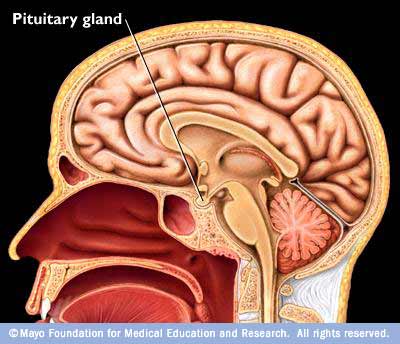
Pituitary Gland
The pituitary gland is very tiny. It has two parts: the anterior lobe and the posterior
lobe. The anterior lobe regulates the
activity of the thyroid, adrenals, and reproductive glands. It produces growth hormones (which stimulates
the growth of bone and tissue), prolactin (the milk production in breastfeeding
women), thyrotrophin (which stimulates the thyroid gland to produce thyroid
hormones), and corticotrophin (which stimulates the adrenal gland to produce
certain hormones). Then, the posterior
lobe releases the antidiuretic hormone (which helps control the body water
balance, which affects the kidneys and urine output), and releases oxytocin
(which triggers contractions of the uterus during labor.
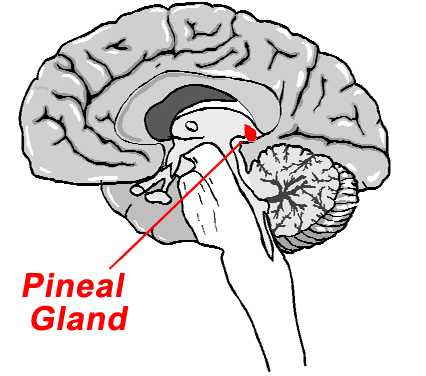
Pineal Gland
The pineal gland is located in the middle of the brain. It secretes melatonin, which is a hormone that helps to regulate the wake-sleep cycle
Adrenal Glands
The outer part of the adrenal glands is the adrenal cortex. It produces hormones called corticosteroids, which influences/regulates salt/water balance, the body's response to stress, metabolism, immune system, and sexual development. The inner part is called the adrenal medulla. It produces catecholamines like epinephrine, also known as adrenaline. It increases blood pressure and heart rate when the body experiences stress, and it is used to counteract severe allergic reactions.
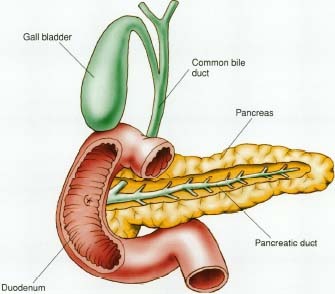
Pancreas
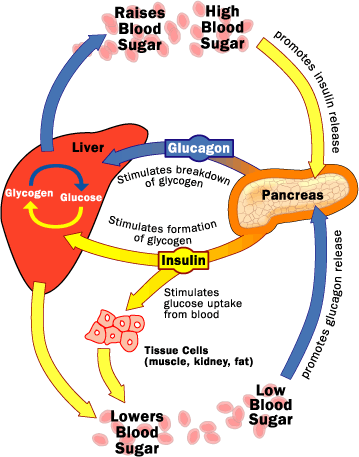
The pancreas produces very important hormones. Those hormones are insulin and glucagon. Those two hormones work together to maintain steady levels of glucose in the blood, and keep the body supplied with enough to produce and maintain energy.
Diagram Of The Pancreas ---->
Insulin & Diabetes
Insulin stores nutrients right after eating by reducing the concentrations of glucose, fatty acids, and amino acids in the blood stream. The pancreas secretes insulin in response to the increase in blood sugar when a person eats. Most cells have insulin receptors that bind the insulin to the cell. When a cell has insulin attached to it, the cell is then able to activate the other receptors. The receptors are designed to absorb glucose from the blood stream and move the glucose into the inside of the cell for energy. Without insulin in our bodies, we wouldn't be able to process the glucose, and that means we would have no energy at all for movement, growth, repair, or other functions.
For instance, there's type 1 diabetes, which is also known as juvenile diabetes. It happens when the pancreas doesn't make enough insulin. The symptoms are excessive thirst, hunger, urination and weight loss. In kids and teenagers, it's usually an autoimmune disorder, which means specific immune system cells and antibodies that are made by the immune system attack and destroy the cells of the pancreas that make insulin. It can cause long term complications, including kidney problems, nerve damage, blindness, and early coronary heart disease and stroke. To control the blood sugar levels and minimize the risk of developing any complications, kids need regular injections of insulin. When a person has type 1 diabetes, it's almost as if their body is constantly in "starvation mode", because the cells can't be easily opened to release the energy from the glucose, which comes from the food they eat.
With type 2 diabetes, the body isn't able to respond to insulin normally. Children and teenagers with type 2 diabetes tend to be overweight. Excess body fat plays a role in insulin resistance. Symptoms and problems of type 2 are basically the same as type 1. Some people can control the blood sugar level with dietary changes, exercise, and medications. However, many people will need to take insulin injections. It is the most common form of diabetes, since according to www.free-online-health.com, "over 90% of diabetic cases worldwide are type 2". The pancreas produces as much, and sometimes more than a normal body, but the cells develop a resistance to the insulin. Therefore, the body tries secreting more and more insulin in an attempt to feed the cells. The cells respond slowly to the insulin, so the cells can't absorb the glucose as well. Then, the blood sugar levels are higher than they should be. When the body can't get the energy from the glucose into the cells, the body stores the extra energy in fat cells.
Next to this paragraph is a diagram of glucose regulation in diabetes.
|
|
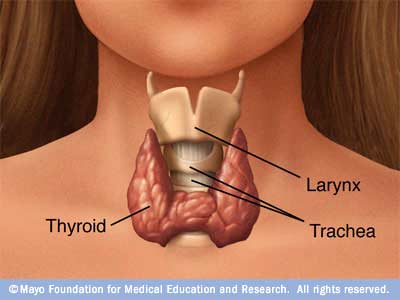
Thyroid Gland
The thyroid gland produces thyroxine and triiodothyronine, which control the rate at which cells burn fuels from food to make energy. The more these hormones enter the blood, the faster chemical reactions occur.
Gonads
The gonads are the main source of sex hormones. In males, they are found in the scrotum, and they secrete hormones called androgens like testosterone, which regulate the body changes that are associated with sexual development. In females, they are known as ovaries, and are found in the pelvis. They make eggs and secrete estrogen and progesterone. Estrogen is involved in the development of female sexual features like breasts, accumulation of body fat around the hips and thighs, and growth spurts. Estrogen and progesterone are involved in pregnancy and the regulation of the menstrual cycle.
Hormones
Hormones are the body’s chemical
messengers. They transfer information
and instructions from one set of cells to the other. There’s a whole bunch of different types, but
each one can only affect the cells that are programmed to receive and respond
to its message. Hormone levels can be
influenced by various factors. Some of
those factors are stress, infection, and changes in the balance of fluid and
minerals in the blood. Hormones are grouped according to chemical structure, and that structure determines whether the hormone will be surrounded by water or fat. That then determines: 1) if the hormone travels in the blood alone or is attached to a protein, 2) if the hormone will bind to receptor sites outside or inside the cell, and 3) how the hormone is metabolized (or broken down).
There are three general structures of hormones. First, there's steroid hormones. They are fat-soluble and made from cholesterol. Some examples are estrogen, androgen, and progesterones.
The second type of hormones is amino acid derivatives. They are water-soluble and made from amino acids. They are stored in endocrine cells until they aren't needed any longer. One example of an amino acid derivative is epinephrine.
The third and final type of hormone is polypeptide hormones. They're water soluble, and consist of long chains of amino acids (sometimes up to two hundred amino acids long!). Polypeptide hormones are stored in endocrine cells until they are needed to regulate processes such as metabolism, lactation, growth, and reproduction. Types of polypeptide hormones are insulin, growth hormone, and prolactin.
|